
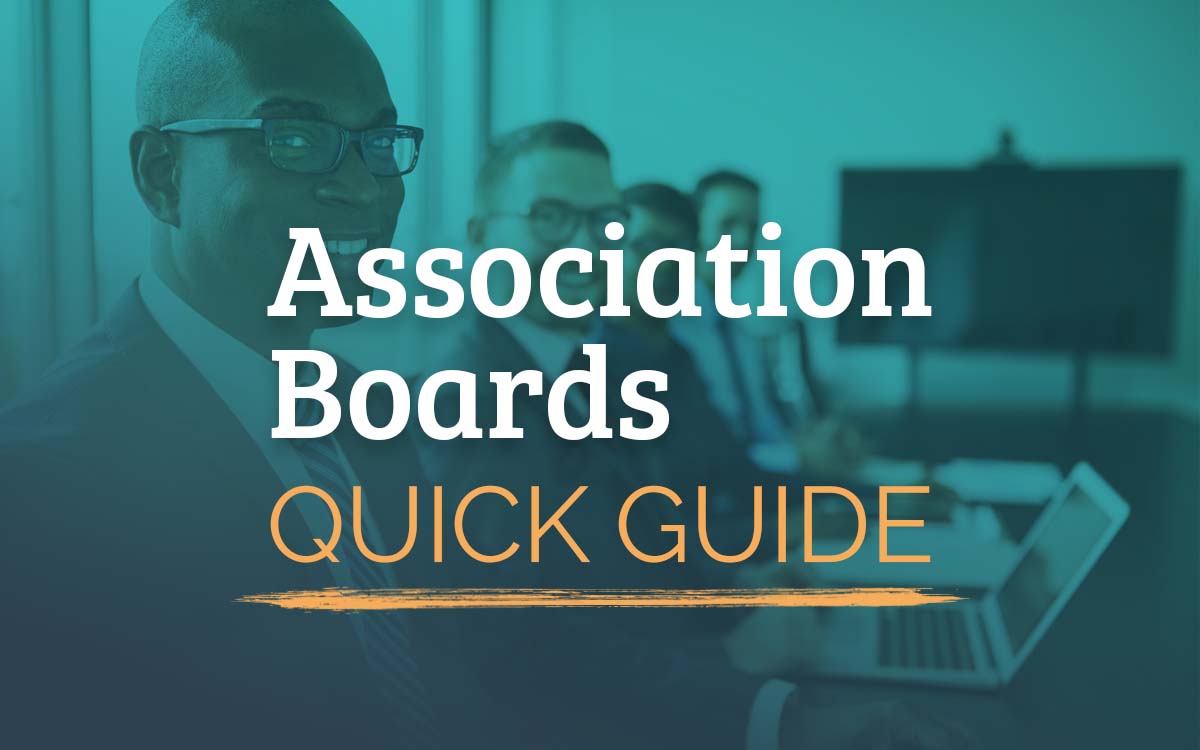
Assembling a talented board is critical to the health and growth of your association. The right board members make everything run smoother. Likewise, board members who aren’t a good fit can be a huge drain.
Of course, you want to attract capable people for specific board roles. Unfortunately, this is often more challenging than it sounds.
In this post, we’ll cover the responsibilities of board members, tips for attracting talent, and helpful resources.
The duties of association board members vary depending on the type of association and its governing documents. But, in general, the board of directors of an association manages the affairs.
Association Board Member Responsibilities
Some of the critical responsibilities of board members may include:
- Setting the strategic direction and goals of the organization.
- Developing and approving policies, procedures, and budgets.
- Overseeing the financial management of the organization, reviewing financial statements and ensuring proper accounting procedures.
- Hiring, supervising, and evaluating the performance of the executive director or staff members.
- Ensuring compliance with legal and regulatory requirements, such as tax and employment laws.
- Representing and promoting the organization’s mission and goals to the public and stakeholders.
- Fostering relationships with key partners, sponsors, and other stakeholders.
Association board members are expected to act in the organization’s best interests. They may also attend regular board meetings and take part in committees.
Now that we’ve covered the responsibilities of board members, the next step is to assess your association’s needs to identify the expertise and experience that your board requires.
Association Board Member Needs Assessment
Here are some steps you can take to assess your association’s board member needs:
- Review your association’s strategic plan. A strategic plan should outline your association’s priorities, as well as the skills required to achieve them. Use this to identify the expertise that your board will need to support your strategic plan.
- Conduct a skills gap analysis. Assess the skills that your current board members have and compare them to the skills that your association needs to achieve its goals. Identify any gaps in your board’s knowledge and use this to guide your recruitment.
- Solicit input from board members and staff. Ask your current board members and staff to list the board’s strengths and weaknesses. This can help identify areas where the board may need more support.
- Consider the diversity of your board. Assess the diversity of your board’s gender, race, ethnicity, age, and other factors. A diverse board brings a range of perspectives that can help an association better serve its members.
- Conduct a self-assessment. Encourage your board members to conduct a self-assessment of their own skills. This can identify areas where they may need more training and where they can contribute more.
Assessing your board member needs will ensure that the board is well-equipped to support the association’s goals. Now that you’ve identified the skills you need, it’s time to start looking for candidates.
Association Board Member Recruitment
Here are five ways to attract new board members for your association:
- Develop a clear mission and vision. A compelling mission and vision can attract passionate individuals to your cause. Make sure the messaging emphasizes the association’s impact on stakeholders and the community.
- Cultivate a solid organizational culture. People are more likely to serve on a board if they feel that others will value their contributions. Ensure your association has a solid organizational culture prioritizing transparency, communication, and inclusivity.
- Leverage your existing network. Ask your current board members, staff, and members to recommend potential board candidates. You can also contact other organizations in your community for recommendations.
- Promote the benefits of serving on the board. Serving on a board can be a valuable professional development opportunity and a chance to make an impact. Highlight the benefits of serving on your board, such as networking opportunities or training and development programs.
- Make recruitment easy and accessible. Develop a clear and easy-to-understand application process for potential board members. Ensure all application materials are available online and the process is efficient. Host information sessions to educate candidates on your association and the role.
Board Member Resources
You may have a board member (or more) without prior experience. Fortunately, there are lots of resources for getting up to speed. Assembling helpful resources offers support and increases the likelihood of your board’s success.
Many resources are available to help new association board members get up to speed on their roles and responsibilities. Here are a few suggestions:
- Orientation materials: Provide new board members with a handbook that outlines the mission, governance structure, policies and procedures. This can be a great starting point for learning about the association and its operations.
- Training and development programs: These programs may cover leadership, governance, financial management, and strategic planning.
- Conferences and workshops: This is an excellent way for board members to learn from experts in their field and network with other leaders.
- Online resources: This includes webinars, white papers, blogs, and discussion forums. The Association of Governing Boards of Universities and Colleges (AGB) and the National Association of Nonprofit Organizations and Executives (NANOE) offer a wealth of resources.
- Mentoring programs: Some associations pair new board members with experienced leaders. This is a great way to provide guidance and advice to new board members.
Assembling an effective board is crucial for an association’s success and long-term health. A committed and diverse board brings a range of expertise to the table. By investing in board development, associations can build a strong foundation and ensure they have the leadership to meet today’s challenges.
Of course, the right AMS can also ease board member communication and collaboration. Contact us for an AMO demo today!