
Understanding your members and prospects behavior, needs, and goals is essential to creating an engagement strategy that works. By identifying where they’re at in the buyer’s journey, you can serve your members with appropriate content and calls to action. Kissmetrics wrote an interesting article on understanding the behavior of your website visitors – specifically, why they come to your site, what they’re looking for, how they interact and why they leave – and how that affects their end result action.
Where is the visitor coming from?
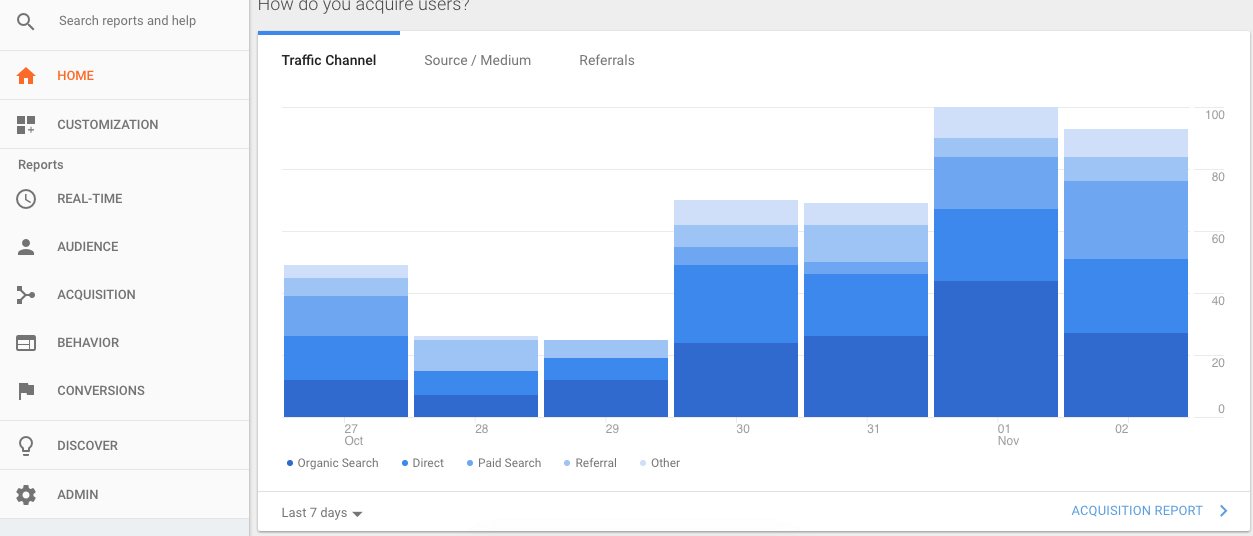
Web traffic can stem from referrals, paid advertisements, direct searches, or organic searches. Regardless of a visitors path of entry, there’s probably a specific reason they came to your site. “Some consumers possess an actual problem and think your product can offer a solution. Others don’t even recognize their looming challenge, yet find your product somewhat intriguing,” (Kissmetrics).
To uncover a prospect’s motivation, we need to understand how they ended up on your site. For example, if it was a referral, that means someone else told them about your association (a person, another website, blog article, etc.). Because of this, they probably already have an understanding of what you do and some benefits you offer. Now they’re looking for more concrete information and possibly, how to get involved. So instead of blindly offering content you hope can help them, you can use the referral metrics to point them to a specific path that increases the probability of their conversion.
Google Analytics is a great tool to track traffic. If you’re not using GA, it may be time to get it installed. Check out this step by step guide from our parent company, ArcStone to get started.
Deciphering user needs
Now that we’ve determined how a user found our site, it’s time to decipher their actions. Ideally, a user converts while on your site. Whether that’s downloading an ebook, filling out a form, contacting sales or signing up for a membership, these mini interactions with your site help direct your efforts.
If someone downloads an ebook and contacts sales, it’s pretty clear they’re interested in learning more or possibly ready to sign up for a membership. Tracking their activity helps prepare membership managers for the initial conversation. On the other hand, if you see a visitor on your website that bounces after 1 minute, it’s probably not the right time to reach out.
Don’t Forget About Social Channels
Think of your social media platforms as an extension of your website. Though they may have different tones, audiences, and levels of interactions, the ultimate purpose of your social media accounts is to drive users to your site. Similar to step 2, it’s important to track how they interact on each platform and how that interaction affects their whether or not they sign up or renew their membership.
Social media also gives you a chance to interact with your users more than you would on your website. Use this opportunity to answer questions, help a customer, or provide more information. Check out these great examples of customer-company interactions.
Improve your conversion rates and delight your members by paying attention to the metrics. Get insight from Google Analytics and engage on social media. We help all AMO users install GA tracking codes on their site.